Abdominal Aortic Aneurysm: The Silent Killer You Can Screen For
AAA causes no symptoms until rupture — yet a simple ultrasound scan can detect it early. Learn who needs screening and what treatment options exist.
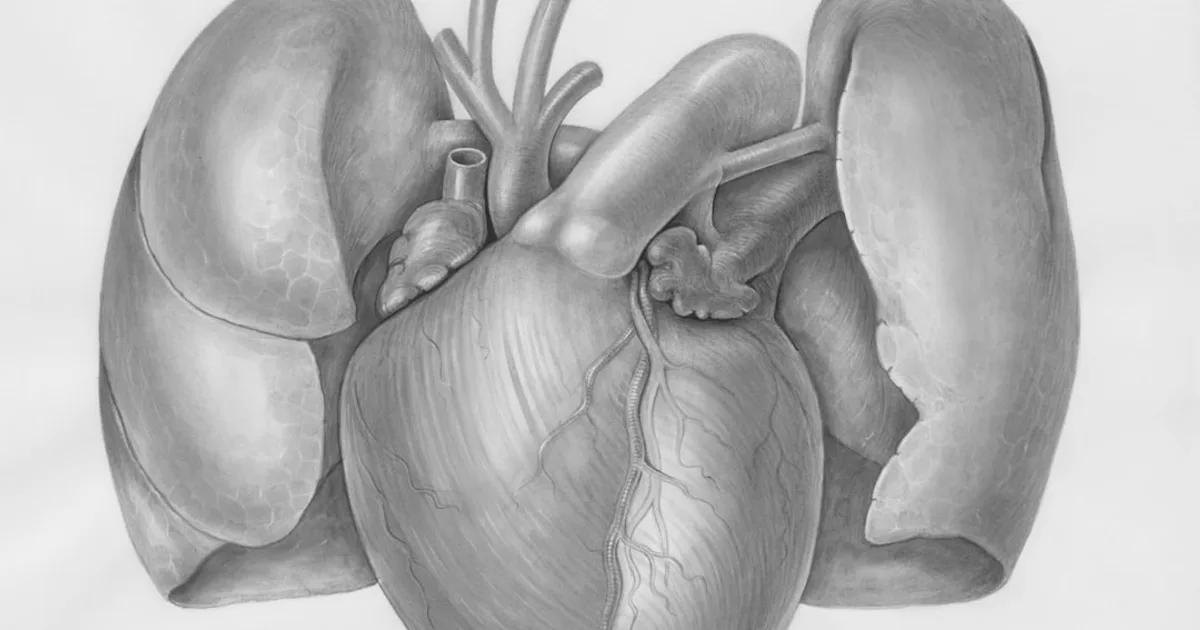
Citable definition: An abdominal aortic aneurysm (AAA) is a permanent, localized dilation of the abdominal aorta — the main artery supplying blood to the lower body — to a diameter of 3 cm or more, representing at least 1.5 times the normal vessel diameter. Because it typically causes no symptoms until life-threatening rupture occurs, population-based ultrasound screening is recommended by both European and American vascular guidelines for at-risk individuals.
What Is an Abdominal Aortic Aneurysm?
The aorta is the largest artery in the human body. It originates at the heart, arches through the chest, and descends through the abdomen, where it eventually divides into the two iliac arteries (the vessels supplying each leg). In its abdominal segment, the aorta normally measures roughly 2 cm in diameter in adults.
An aneurysm (a bulging or ballooning of an artery wall) forms when the structural proteins that give the vessel wall its strength — primarily elastin and collagen — progressively degrade. The wall weakens, intraluminal blood pressure acts on it continuously, and the vessel expands. Once an AAA reaches a diameter of approximately 5.5 cm in men (or 5.0 cm in women), the annual risk of spontaneous rupture rises sharply, and rupture carries an overall mortality (death rate) exceeding 80% when pre-hospital deaths are included.
The pathophysiology (the biological mechanisms driving disease) is multifactorial. Chronic inflammation within the aortic wall, oxidative stress, proteolytic enzyme activity (enzymes that break down structural proteins), and hemodynamic (blood-flow-related) forces all contribute. Atherosclerosis (the buildup of fatty plaques in artery walls) frequently coexists but is now understood to be a parallel process rather than the sole cause.
AAA affects approximately 1–2% of men over 65 in Western populations, according to available data; prevalence estimates vary by population and time period. The condition is four to six times more common in men than in women, though women who develop AAA face a higher rupture risk at smaller diameters.
Symptoms: Why AAA Is Called “The Silent Killer”
The vast majority of abdominal aortic aneurysms are entirely asymptomatic (producing no noticeable symptoms) until a catastrophic event occurs. This silence is precisely what makes screening so valuable.
Possible symptoms when an AAA is present but intact
- Pulsating sensation in the abdomen — sometimes described as feeling a heartbeat in the belly; most common in thin individuals
- Dull, persistent lower back or flank pain — caused by pressure on surrounding structures
- Vague abdominal discomfort — easily attributed to gastrointestinal causes
Symptoms suggesting rapid expansion or impending rupture — EMERGENCY
The following symptoms demand immediate emergency care (call 999 in the UK, 112 in Europe, or 911 in North America):
- Sudden, severe abdominal or back pain — often described as tearing or ripping
- Hypotension (dangerously low blood pressure) and collapse
- Pulsatile abdominal mass felt by a clinician on examination
- Syncope (loss of consciousness) or profound weakness
Do not wait. Ruptured AAA is a surgical emergency with a survival window measured in minutes to hours.
Diagnosis: What to Expect
Ultrasound screening — the gold standard for detection
Abdominal ultrasound (duplex or B-mode) is the recommended first-line screening tool. It is painless, radiation-free, inexpensive, and highly accurate for measuring aortic diameter. The ESVS 2019 guidelines report sensitivity (the ability to correctly identify those with the condition) approaching 100% for AAA detection by ultrasound in experienced hands.
In the United Kingdom, the NHS Abdominal Aortic Aneurysm Screening Programme invites all men in their 65th year for a single abdominal ultrasound. This programme was informed by the landmark Multicentre Aneurysm Screening Study (MASS). The MASS trial, reported in the Lancet (2002; PMID: 12383667) and with longer-term follow-up published subsequently, demonstrated a significant reduction in AAA-related mortality in screened men, according to available data. A reduction in AAA-related mortality in screened men was reported across the MASS follow-up publications; readers are directed to the primary sources (PMIDs 12383667 and 17449506) for the specific figures and follow-up durations, as these could not be independently verified against abstracts at the time of publication.
CT angiography — for surgical planning
Once an AAA is detected and repair is being considered, CT angiography (a detailed X-ray scan using contrast dye to map the arteries) provides precise anatomical information about the aneurysm’s size, shape, and relationship to surrounding vessels. This imaging is essential for planning both open surgery and endovascular repair.
Surveillance intervals for known AAA (ESVS 2019 recommendations)
| Aortic diameter | Recommended surveillance |
|---|---|
| < 3.0 cm (normal) | No further surveillance needed |
| 3.0 – 3.9 cm (small AAA) | Ultrasound every 3 years |
| 4.0 – 4.9 cm (medium AAA) | Ultrasound every 12 months |
| 5.0 – 5.4 cm (large AAA) | Ultrasound every 3–6 months |
| ≥ 5.5 cm in men / ≥ 5.0 cm in women | Refer to vascular surgery |
Source: ESVS 2019 Clinical Practice Guidelines on AAA Management. Specific interval figures could not be verified against the guideline abstract at the time of publication; consult the full guideline document for confirmation.
Treatment: From Watchful Waiting to Surgery
Conservative management — for small aneurysms
For AAAs below the surgical threshold, the goals are to slow growth and reduce cardiovascular risk:
- Smoking cessation: Smoking is the single most powerful modifiable risk factor for AAA development and progression. The ESVS guidelines give this a Class I, Level A recommendation (the highest level of evidence).
- Blood pressure control: Target systolic blood pressure below 140 mmHg (or lower in high-risk patients). ACE inhibitors and beta-blockers are commonly used agents.
- Statin therapy (cholesterol-lowering medications that also have anti-inflammatory vascular effects): Associated with reduced AAA growth rates in observational studies and recommended for cardiovascular risk reduction in all AAA patients by both ESVS and AHA/ACC guidelines.
- Antiplatelet therapy (medications that reduce blood clot formation, such as low-dose aspirin): Recommended for patients with coexisting cardiovascular disease.
There is currently no approved pharmacological treatment proven to prevent AAA rupture or cause regression — a major area of ongoing research.
Surgical repair — for large or rapidly growing aneurysms
Two main approaches exist:
1. Open Surgical Repair (OSR)
The traditional approach. The surgeon makes an abdominal incision, clamps the aorta, and replaces the aneurysmal segment with a synthetic graft (a tube made of Dacron or PTFE). OSR has decades of proven long-term durability and remains the standard for younger, fit patients and those with anatomy unsuitable for endovascular repair.
2. Endovascular Aneurysm Repair (EVAR)
A minimally invasive technique introduced in the 1990s. A stent-graft (a fabric tube supported by a metal scaffold) is delivered via catheters inserted through small groin incisions and deployed inside the aneurysm, excluding it from blood pressure. EVAR carries a significantly lower 30-day operative mortality compared with open repair, but requires lifelong surveillance imaging to detect complications such as endoleaks (persistent blood flow into the aneurysm sac outside the stent-graft).
Comparing OSR and EVAR
| Feature | Open Repair (OSR) | Endovascular (EVAR) |
|---|---|---|
| Incision | Large abdominal | Two small groin incisions |
| Hospital stay | 7–10 days typical | 1–3 days typical |
| 30-day mortality (elective) | ~3–5% | ~1–2% |
| Long-term durability | Excellent | Requires surveillance |
| Re-intervention rate | Low | Higher (endoleaks, migration) |
| Suitable for all anatomy | Yes | No (depends on neck anatomy) |
The operative mortality figures shown are indicative ranges based on available data; they could not be verified against the cited guideline abstracts at the time of publication. Consult the ESVS 2019 guidelines and AHA/ACC 2022 Aortic Disease Guideline (Isselbacher et al., JACC, 2022; DOI: 10.1016/j.jacc.2022.08.004) directly for confirmed figures.
The 2022 AHA/ACC Guideline for the Diagnosis and Management of Aortic Disease recommends elective repair for asymptomatic AAA at ≥ 5.5 cm in men and ≥ 5.0 cm in women, or when growth is rapid (the precise growth-rate threshold should be confirmed against the full guideline text, as criteria vary across guidelines) — broadly consistent with ESVS recommendations.
For more on arterial conditions and treatment options, see our arterial health section and our vascular treatments overview.
Prevention: What You Can Do Today
While genetic predisposition cannot be changed, several lifestyle factors significantly influence AAA risk:
- Never smoke — or quit now. Smoking multiplies AAA risk by approximately four to five times. Cessation at any age reduces risk. Ask your physician about pharmacological cessation support.
- Control your blood pressure. Hypertension (high blood pressure) accelerates aortic wall stress. Regular monitoring and treatment are essential.
- Manage cholesterol and metabolic risk. Dyslipidemia (abnormal blood fat levels) and type 2 diabetes are associated with aortic disease. Diet, exercise, and medications where appropriate all play a role.
- Stay physically active. Moderate aerobic exercise supports cardiovascular health broadly. Consult your physician before beginning any new exercise program if you have a known AAA.
- Know your family history. Having a first-degree relative (parent or sibling) with AAA increases your personal risk significantly. Inform your doctor.
- Attend screening if invited. If you live in the UK, do not ignore your NHS AAA screening invitation. If you are a man over 65 who has smoked and you have not been screened, ask your GP proactively.
For practical daily habits that support vascular health, visit our prevention hub.
When to See a Doctor
See your GP or a vascular specialist promptly if:
- You are a man aged 65 or older who has ever smoked and have never had an AAA screen
- You have a first-degree relative who was diagnosed with AAA
- You experience a persistent, unexplained pulsating sensation in your abdomen
- You have been diagnosed with AAA and notice changes in your symptoms
Go to your nearest emergency department immediately — or call emergency services — if:
- You experience sudden, severe abdominal, back, or flank pain
- You feel faint, collapse, or develop signs of shock (pale, sweating, rapid weak pulse)
These symptoms may indicate AAA rupture, which is a life-threatening emergency requiring immediate surgical intervention.
Also available in French on our sister site
Sources
-
ESVS Clinical Practice Guidelines on the Management of Abdominal Aorto-iliac Artery Aneurysms. European Journal of Vascular and Endovascular Surgery, 2019. DOI: 10.1016/j.ejvs.2018.09.020
-
Multicentre Aneurysm Screening Study (MASS) — initial report. Ashton HA et al. The Lancet, 2002; 360(9345):1531–1539. PMID: 12383667
-
Multicentre Aneurysm Screening Study (MASS) — longer-term follow-up. PMID: 17449506
-
2022 AHA/ACC Guideline for the Diagnosis and Management of Aortic Disease. Isselbacher EM et al. Journal of the American College of Cardiology, 2022. DOI: 10.1016/j.jacc.2022.08.004
-
NHS Abdominal Aortic Aneurysm Screening Programme. NHS England. Available at: www.nhs.uk/conditions/abdominal-aortic-aneurysm-screening
-
Endovascular versus open repair of abdominal aortic aneurysm. Cochrane Review, Paravastu SCV et al. Cochrane Database of Systematic Reviews, 2014. DOI: 10.1002/14651858.CD004178.pub2
Medical Disclaimer: This article is produced by the Petit Veinard Editorial Board for informational and educational purposes only. It does not constitute medical advice, diagnosis, or a treatment recommendation. The information provided reflects published guidelines and peer-reviewed evidence available at the time of writing and may not apply to every individual’s clinical situation. Always consult a qualified physician or vascular specialist before making any decisions about your health, screening, or treatment. In the event of a suspected medical emergency, contact your local emergency services immediately.
Frequently asked questions
What are the warning signs of an abdominal aortic aneurysm?
Who should be screened for abdominal aortic aneurysm?
Is abdominal aortic aneurysm surgery dangerous?
Can an abdominal aortic aneurysm heal on its own?
Petit Veinard Editorial Board
This article was written and reviewed by vascular medicine specialists. Sources: peer-reviewed journals (PubMed), ESVS guidelines, AHA/ACC recommendations, Cochrane Reviews.