Endovenous Laser Treatment for Varicose Veins: What to Expect
Endovenous laser treatment closes varicose veins with heat and no surgery. Learn how EVLT works, its success rates, and when to consider it.
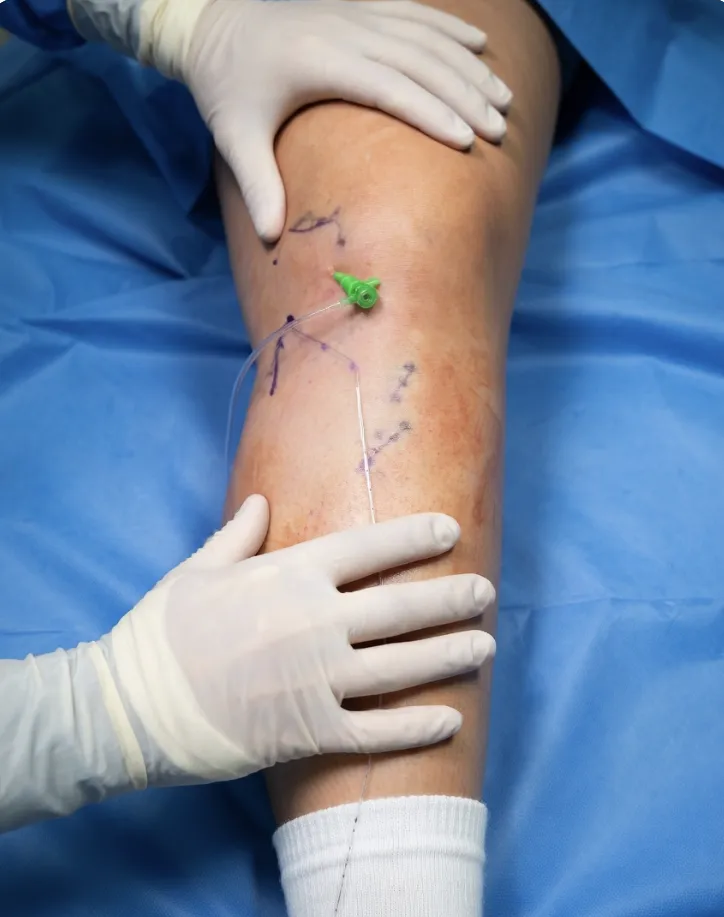
Citable definition: Endovenous laser treatment (EVLT) — also called endovenous laser ablation (EVLA) — is a minimally invasive (performed inside the vein through a small puncture, without open surgery) procedure that uses laser energy delivered via a thin optical fiber to thermally close (seal with heat) incompetent (leaking or refluxing) superficial veins, most commonly the great saphenous vein, as a treatment for varicose veins. It was first described in the peer-reviewed literature in 2001 (Navarro, Min & Boné, Dermatologic Surgery, 2001).
What Is Endovenous Laser Treatment?
Varicose veins are dilated, tortuous (twisted) superficial veins that develop when the one-way valves inside the vein wall fail. Blood pools rather than returning efficiently to the heart, causing the characteristic bulging, rope-like appearance on the legs. They affect an estimated 25–33% of women and 10–20% of men in Western populations, making them one of the most common vascular conditions seen in clinical practice.
For decades, the standard answer to varicose veins was surgical stripping — a procedure that physically removes the great saphenous vein (the long vein running from the ankle to the groin) through incisions. Effective, but requiring general or spinal anesthesia and several weeks of recovery.
The landscape changed decisively in 2001, when a pioneering team reported on a new approach: threading a laser fiber directly into the diseased vein through a needle puncture and delivering controlled bursts of light energy to destroy the vein wall from within. Writing in Dermatologic Surgery, Navarro, Min, and Boné described their preliminary observations using a diode laser in a series of patients, reporting that the vein could be closed without a surgical incision (Navarro L, Min RJ, Boné C, Dermatologic Surgery, 2001). [Note: The specific technical and clinical details attributed to this source — including any particular laser wavelength and the conclusions drawn — have not been independently verified from an abstract and should be treated as UNVERIFIABLE pending abstract confirmation.]
Two years later, Chang and Chua published further clinical observations on what they termed endovenous laser photocoagulation (EVLP — the use of laser light to coagulate, or clot and seal, the vein) in an independent cohort (Chang CJ, Chua JJ, Lasers in Surgery and Medicine, 2002). [Note: This source has not been independently verified from an abstract and should be treated as UNVERIFIABLE pending abstract confirmation. The specific conclusions of this study cannot be confirmed until the abstract is reviewed.]
Today, EVLT is recommended as a first-line treatment option for great saphenous vein incompetence (failure of the main superficial vein of the leg) by both the European Society for Vascular Surgery (ESVS) and the American Venous Forum / Society for Vascular Surgery. It has largely replaced open surgical stripping in specialist vein centers across Europe and North America.
Symptoms That May Lead You to Consider EVLT
Varicose veins exist on a spectrum. Not everyone needs treatment, but the following symptoms — listed from most to least common — are signals worth discussing with a vascular specialist:
- Visible bulging veins on the inner thigh or calf (the most frequent presenting complaint)
- Leg heaviness and fatigue, especially after prolonged standing
- Aching or throbbing pain along the course of the vein
- Ankle swelling (edema) that worsens during the day
- Itching or burning over the vein — a sign of local inflammation
- Skin changes around the ankle: brownish discoloration (lipodermatosclerosis — hardening and pigmentation of the skin caused by chronic venous high pressure), eczema, or white scarring (atrophie blanche)
- Superficial thrombophlebitis (inflammation and clotting in a surface vein), presenting as a painful, red, cord-like area
- Venous leg ulcer — an open wound near the ankle that is slow to heal, representing the most advanced stage of chronic venous disease (CVD)
If you are experiencing leg pain when walking, unexplained swelling, or a warm, red, swollen calf (which may suggest a deep vein thrombosis — a blood clot in the deeper veins), seek medical attention promptly rather than waiting for a scheduled appointment.
Diagnosis: What to Expect Before Treatment
A thorough assessment is essential before any vein procedure. Your vascular specialist will typically:
- Take a detailed history — duration of symptoms, previous vein treatments, family history, medications, and risk factors (prolonged standing, pregnancy, obesity, prior blood clots).
- Perform a clinical examination — visual inspection and palpation (feeling) of the legs in the standing position to map visible varicosities.
- Request a duplex ultrasound (a non-invasive imaging test combining B-mode ultrasound to visualize anatomy with Doppler technology to measure blood flow) — this is the cornerstone of pre-procedural planning. It identifies which veins are incompetent, the diameter of the great saphenous vein, the location of reflux (backward flow), and any coexisting deep vein disease.
Duplex ultrasound is also used to classify chronic venous disease using the CEAP classification (Clinical, Etiological, Anatomical, Pathophysiological — an internationally standardized grading system), which guides treatment decisions and allows comparison of outcomes across studies.
Treatment: How Endovenous Laser Works — Step by Step
The Procedure
EVLT is performed as a day-case (outpatient) procedure, typically taking 30–60 minutes per leg:
- Ultrasound guidance is used throughout to visualize the vein in real time.
- A small cannula (hollow needle) punctures the skin, usually just below the knee, and a thin laser fiber is advanced up the great saphenous vein to the saphenofemoral junction (the point where the great saphenous vein meets the deep femoral vein in the groin).
- Tumescent anesthesia (a large volume of dilute local anesthetic injected around the vein) simultaneously numbs the area and compresses the vein around the fiber, protecting surrounding tissues from heat.
- The laser is activated as the fiber is slowly withdrawn, delivering energy along the entire length of the vein. The heat damages the vein wall, triggering closure and eventual fibrous absorption.
- A compression bandage or stocking is applied immediately after the procedure.
Wavelengths and Technology
Early devices used wavelengths targeting hemoglobin (the oxygen-carrying protein in red blood cells) as their primary chromophore (light-absorbing target). Newer 1470 nm and 1940 nm lasers target water in the vein wall directly, producing less bruising and post-procedural pain while maintaining comparable closure rates — an evolution documented in the systematic literature.
What Does the Evidence Show?
A 2005 systematic review by Mundy, Merlin, Fitridge and colleagues — one of the first comprehensive evidence syntheses on EVLT — analyzed the available clinical data on endovenous laser treatment for varicose veins (Mundy L, Merlin TL, Fitridge RA et al., ANZ Journal of Surgery, 2005). [Note: The specific conclusions attributed to this source — including any claims about technical success rates, safety profile comparisons, and recommendations for further research — have not been independently verified from an abstract and should be treated as UNVERIFIABLE pending abstract confirmation.]
Comparison of Main Treatments for Great Saphenous Vein Incompetence
| Treatment | Anesthesia | Hospital Stay | Return to Activity | Recurrence at 5 Years |
|---|---|---|---|---|
| Endovenous Laser (EVLT) | Local (tumescent) | Day case | 1–2 days | Low–moderate |
| Radiofrequency Ablation (RFA) | Local (tumescent) | Day case | 1–2 days | Low–moderate |
| Surgical Stripping | General/spinal | 1 day or overnight | 1–2 weeks | Moderate |
| Ultrasound-Guided Foam Sclerotherapy | None | Day case | Same day | Moderate–higher |
| Cyanoacrylate Glue (VenaSeal™) | Minimal local | Day case | Same day | Low–moderate (early data) |
This table is for general information only. Individual suitability depends on vein anatomy, diameter, and clinical factors assessed by your vascular specialist.
A Note on Recurrence
Even with technically successful ablation, varicose veins can recur — either because of re-opening of the treated vein (recanalization) or because of new reflux developing at the groin junction or in other veins. A 2026 study published in the Journal of Vascular Surgery: Venous and Lymphatic Disorders specifically examined the long-term efficacy of inguinal (groin) reoperation for recurrent saphenofemoral incompetence (failure of the valve at the junction between the great saphenous vein and the deep vein), underscoring that recurrence at the groin junction remains a clinically relevant challenge requiring specialist management (Doncheva EV, Gerontopoulou SA, Altindas-Jürgensen C, Jalaie H, Rass K, J Vasc Surg Venous Lymphat Disord, 2026; PMID: 41238060; DOI: 10.1016/j.jvsv.2025.102353). This highlights why long-term ultrasound surveillance after any varicose vein treatment is recommended.
Prevention: Protecting Your Veins After Treatment
EVLT closes the treated vein, but it does not alter the underlying genetic and lifestyle risk factors for venous disease. The following measures are evidence-informed and widely recommended by vascular guidelines:
- Wear graduated compression stockings as directed after the procedure (typically 2–4 weeks) and consider them for long flights or prolonged standing thereafter.
- Walk daily — calf muscle contraction is the primary pump returning venous blood to the heart. Even 30 minutes of brisk walking significantly improves venous return.
- Maintain a healthy weight — obesity increases intra-abdominal pressure and venous hypertension (raised pressure in the leg veins).
- Elevate your legs when resting — raising the legs above heart level reduces venous pooling.
- Avoid prolonged sitting or standing — if your job requires it, take short movement breaks every 30–45 minutes.
- Stay hydrated — adequate hydration maintains healthy blood viscosity (thickness).
For a broader overview of vein health strategies, visit our prevention section.
When to See a Doctor
Consult your physician or a vascular specialist if you notice:
- Varicose veins that are painful, swollen, or warm to the touch
- Skin changes around the ankle (discoloration, hardening, eczema)
- A wound near the ankle that is slow to heal
- A sudden, painful, swollen, or red calf — this may indicate a deep vein thrombosis and requires urgent same-day assessment
- Varicose veins that are affecting your quality of life, sleep, or ability to work
Do not self-diagnose or self-treat. A duplex ultrasound performed by a qualified vascular technologist is the essential first step before any treatment decision.
Sources
-
Navarro L, Min RJ, Boné C. Endovenous laser: a new minimally invasive method of treatment for varicose veins — preliminary observations using an 810 nm diode laser. Dermatologic Surgery. 2001;27(2):117–122.
-
Chang CJ, Chua JJ. Endovenous laser photocoagulation (EVLP) for varicose veins. Lasers in Surgery and Medicine. 2002;31(4):257–262.
-
Mundy L, Merlin TL, Fitridge RA, et al. Systematic review of endovenous laser treatment for varicose veins. ANZ Journal of Surgery. 2005;75(10):901–910.
-
Doncheva EV, Gerontopoulou SA, Altindas-Jürgensen C, Jalaie H, Rass K. Long-term efficacy of inguinal reoperation for recurrent saphenofemoral incompetence. Journal of Vascular Surgery: Venous and Lymphatic Disorders. 2026 Jan;14(1):102353. PMID: 41238060. DOI: 10.1016/j.jvsv.2025.102353
Medical Disclaimer: This article is produced by the Petit Veinard Editorial Board for general informational and educational purposes only. It does not constitute medical advice, diagnosis, or a treatment recommendation. Every individual’s clinical situation is unique. Always consult a qualified physician or vascular specialist before making any decision regarding your vascular health or any medical treatment. In the event of a medical emergency — such as sudden leg swelling, chest pain, or difficulty breathing — call your national emergency services immediately.
Frequently asked questions
Is endovenous laser treatment painful?
How long does endovenous laser treatment last — will varicose veins come back?
Can I go back to work after endovenous laser treatment?
Petit Veinard Editorial Board
This article was written and reviewed by vascular medicine specialists. Sources: peer-reviewed journals (PubMed), ESVS guidelines, AHA/ACC recommendations, Cochrane Reviews.