Tobacco & Peripheral Artery Disease: How Smoking Destroys Your Arteries
Smoking is the #1 modifiable risk factor for PAD. Learn how tobacco damages arterial walls, what symptoms to watch for, and how to protect your legs.
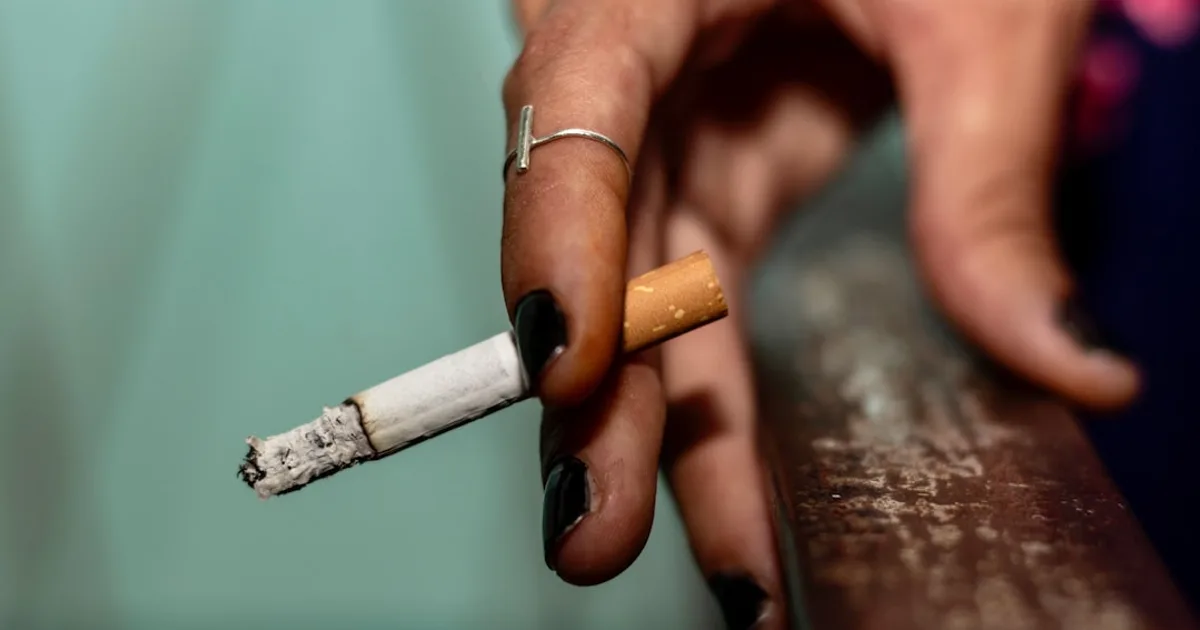
Citable definition: Peripheral artery disease (PAD) is a chronic atherosclerotic condition in which the arteries supplying the limbs — most often the legs — become progressively narrowed by plaque, reducing blood flow and causing ischemia (oxygen deprivation of tissue). Tobacco smoking is its single most important modifiable risk factor, acting through direct toxic injury to the arterial wall, accelerated atherosclerosis, and pro-thrombotic (clot-promoting) effects.
What Is Peripheral Artery Disease — and Why Does Tobacco Matter So Much?
Peripheral artery disease affects an estimated 200 million people worldwide, yet it remains dramatically under-diagnosed — partly because its earliest symptoms are easily dismissed as “just aging legs.” At its core, PAD is a circulation problem: the arteries that carry oxygenated blood from the heart to the legs, feet, arms, and kidneys become stiff, inflamed, and clogged with atherosclerotic plaques (fatty deposits that harden over time inside the vessel wall).
Tobacco smoking accelerates every step of this process. Unlike many cardiovascular risk factors that exert a modest, additive effect, smoking acts as a multiplier — dramatically amplifying the damage caused by high blood pressure, diabetes, and elevated cholesterol. Understanding exactly how cigarette smoke injures your arteries is the first step toward protecting them.
For a broader overview of how the arterial system works and what can go wrong, visit our arteries section.
How Smoking Destroys the Arterial Wall: The Biological Mechanisms
1. Direct Toxic Injury to the Endothelium
The endothelium (the single-cell inner lining of every blood vessel) is the first casualty of tobacco smoke. A landmark 1998 review by Powell in European Journal of Vascular and Endovascular Surgery described in detail how cigarette smoke constituents strip away the endothelium’s protective functions, triggering inflammation, reducing the production of nitric oxide (a molecule that keeps vessels relaxed and open), and promoting the adhesion of white blood cells and platelets to the vessel wall. (Powell JT, Eur J Vasc Endovasc Surg, 1998.)
This endothelial dysfunction is not a slow, background process. It begins with the very first cigarettes and compounds with every subsequent exposure.
2. Accelerated Atherosclerosis
Once the endothelium is damaged, LDL cholesterol (low-density lipoprotein, the so-called “bad cholesterol”) infiltrates the arterial wall more easily. Immune cells called macrophages engulf oxidized LDL and become “foam cells,” forming the fatty streaks that eventually grow into calcified plaques. Smoking accelerates oxidative stress — the chemical imbalance that oxidizes LDL — making plaques grow faster and become more unstable (prone to rupture and sudden clot formation).
3. Pro-Thrombotic and Pro-Inflammatory Effects
Nicotine and carbon monoxide together increase fibrinogen levels (a protein central to blood clotting), raise platelet stickiness, and reduce the flexibility of red blood cells. The net result: blood in a smoker’s arteries is thicker, clots more readily, and flows less efficiently through already-narrowed vessels.
4. Heavy Metals in Cigarette Smoke
A 2004 study published in Circulation by Navas-Acien and colleagues used data from the US National Health and Nutrition Examination Survey (NHANES) to show that both lead and cadmium — heavy metals present in cigarette smoke and absorbed through the lungs — were independently associated with a significantly increased risk of PAD, even after adjusting for other cardiovascular risk factors. (Navas-Acien A et al., Circulation, 2004, PMID: 15313949.)
The Numbers: How Much Does Smoking Raise Your PAD Risk?
The Edinburgh Artery Study — one of the most rigorous long-term population studies of peripheral arterial disease in Europe — followed over 1,500 men and women in Edinburgh, Scotland. A 1999 analysis by Price, Mowbray, Lee, Rumley, and colleagues, published in Arteriosclerosis, Thrombosis, and Vascular Biology, found that:
- Current smokers had markedly higher rates of PAD compared to non-smokers, with smoking emerging as a dominant independent risk factor in its association with PAD.
- The risk scaled with pack-years (a measure combining the number of cigarette packs smoked per day multiplied by years of smoking): the longer and heavier the smoking history, the greater the arterial damage, according to available data.
- Importantly, ex-smokers retained a substantially elevated risk compared to lifelong non-smokers, underscoring that arterial injury accumulates over time and does not simply disappear upon quitting.
(Price JF et al., Arterioscler Thromb Vasc Biol, 1999, PMID: 9974397.)
These findings align with both the European Society for Vascular Surgery (ESVS) 2017 Clinical Practice Guidelines on the Management of Peripheral Arterial Diseases and the AHA/ACC 2016 Guideline on the Management of Patients with Lower Extremity Peripheral Artery Disease, both of which classify smoking cessation as a Class I recommendation (the highest level of evidence-based guidance) for all patients with PAD.
Symptoms of PAD: What Smokers Should Watch For
PAD symptoms develop gradually, and up to 50% of patients are asymptomatic in early stages. When symptoms do appear, they typically follow a recognizable pattern:
Intermittent Claudication (Most Common)
Cramping, aching, or fatigue in the calf, thigh, or buttock that occurs predictably during walking and resolves within minutes of rest. The location of pain reflects where the arterial blockage is: calf pain usually indicates a femoral or popliteal artery problem; buttock or thigh pain suggests aorto-iliac disease.
Rest Pain
As PAD progresses, pain occurs even at rest — particularly at night, when the legs are elevated and gravity no longer assists blood flow. Patients often describe hanging their foot off the bed for relief.
Critical Limb Ischemia (CLI) — A Vascular Emergency
The most severe stage of PAD, CLI (also called chronic limb-threatening ischemia, CLTI) involves:
- Non-healing ulcers or wounds on the feet or lower legs
- Gangrene (tissue death)
- Persistent rest pain lasting more than two weeks
CLI requires immediate medical attention. Without revascularization (restoring blood flow), amputation risk is high.
Other Warning Signs
- Coldness or pallor (paleness) in one foot compared to the other
- Shiny, hairless skin on the lower legs
- Weak or absent pulse in the foot or behind the knee
Diagnosis: What to Expect
If you or your physician suspects PAD, the diagnostic workup is straightforward and non-invasive in its first steps:
| Test | What It Measures | Notes |
|---|---|---|
| ABI (Ankle-Brachial Index) | Ratio of blood pressure at ankle vs. arm | ABI < 0.9 confirms PAD; < 0.4 suggests CLI |
| Duplex Ultrasound | Blood flow and arterial anatomy | First-line imaging; no radiation |
| CT Angiography (CTA) | Detailed arterial map | Used before intervention planning |
| MR Angiography (MRA) | Same as CTA, without radiation | Preferred in patients with kidney concerns |
| Conventional Angiography | Gold standard; also allows treatment | Reserved for planned intervention |
The ABI (ankle-brachial index) is the cornerstone screening tool — simple, inexpensive, and highly accurate. Both ESVS and AHA/ACC guidelines recommend it as the first diagnostic step in any patient with suspected PAD.
Treatment: From Lifestyle to Surgery
Treatment of PAD in smokers follows a tiered approach. Smoking cessation is not optional — it is the foundation of every treatment plan.
Conservative Management
- Smoking cessation: The single most impactful intervention. Combination therapy (nicotine replacement + varenicline or bupropion + behavioral support) achieves the highest quit rates.
- Supervised Exercise Therapy (SET): Structured walking programs improve collateral circulation (natural bypass vessels) and walking distance. ESVS and AHA/ACC both give SET a Class I recommendation.
- Antiplatelet therapy: Low-dose aspirin or clopidogrel reduces the risk of heart attack and stroke in PAD patients.
- Statins (cholesterol-lowering medications): Reduce plaque progression and cardiovascular events; recommended for all PAD patients regardless of baseline cholesterol.
- Blood pressure and diabetes control: Essential co-management.
Endovascular (Minimally Invasive) Procedures
- Angioplasty (balloon dilation of the narrowed artery) ± stenting (placement of a metal scaffold to keep the artery open)
- Atherectomy (removal of plaque using a catheter-based device)
These are performed through a small puncture in the groin or wrist, with rapid recovery.
Surgical Revascularization
- Bypass surgery: A vein graft or synthetic tube reroutes blood around the blockage. Used for long or complex lesions not suitable for endovascular treatment.
- Endarterectomy: Surgical removal of plaque from the artery wall; most commonly performed at the carotid artery but occasionally used in the aorto-iliac region.
For patients with CLI who are not candidates for revascularization, amputation may ultimately be necessary — a sobering reminder of the stakes involved.
Explore our treatments section for detailed articles on angioplasty, bypass surgery, and endovascular techniques including EVAR.
Prevention: Protecting Your Arteries Before Damage Begins
The most effective strategy against PAD is prevention — and tobacco avoidance is central to it:
- Never start smoking. No safe level of tobacco exposure for the arteries has been established.
- Quit as early as possible. Every year of continued smoking adds to cumulative arterial injury.
- Exercise regularly. At least 150 minutes of moderate aerobic activity per week supports vascular health.
- Eat a Mediterranean-style diet. Rich in olive oil, fish, vegetables, and legumes; associated with slower atherosclerosis progression.
- Control blood pressure, cholesterol, and blood sugar. These amplify tobacco’s damage when uncontrolled.
- Know your ABI. If you are over 50 and have ever smoked, ask your physician about a screening ABI measurement.
Our prevention section offers practical, evidence-based guides for long-term vascular health.
When to See a Doctor
Consult your physician or a vascular specialist promptly if you experience:
- Leg pain, cramping, or fatigue that consistently appears during walking and resolves with rest
- A wound or sore on your foot or lower leg that is not healing normally
- Sudden, severe pain, coldness, or pallor in a limb (this may indicate acute arterial occlusion — call emergency services immediately)
- Persistent cold feet with a noticeable color difference between both feet
- You are a current or former smoker over age 50 with no prior vascular screening
Do not wait for symptoms to become severe. PAD detected early is far more treatable — and far less likely to lead to amputation or cardiovascular events.
Also available in French on our sister publication: Aussi disponible en français
Sources
-
Price JF, Mowbray PI, Lee AJ, Rumley A, Lowe GD, Fowkes FG. Relationship between smoking and cardiovascular risk factors in the development of peripheral arterial and coronary artery disease: Edinburgh Artery Study. Arterioscler Thromb Vasc Biol. 1999;19(8):2086–2093. PMID: 9974397
-
Navas-Acien A, Selvin E, Sharrett AR, Calderon-Aranda E, Silbergeld E, Guallar E. Lead, cadmium, smoking, and increased risk of peripheral arterial disease. Circulation. 2004;109(25):3196–3201. PMID: 15313949
-
Powell JT. Vascular damage from smoking: disease mechanisms at the arterial wall. Eur J Vasc Endovasc Surg. 1998;15(4):263–268. PMID: 9587325
-
Aboyans V et al. 2017 ESC Guidelines on the Diagnosis and Treatment of Peripheral Arterial Diseases. Eur Heart J. 2018;39(9):763–816. DOI: 10.1093/eurheartj/ehx095
-
Gerhard-Herman MD et al. 2016 AHA/ACC Guideline on the Management of Patients with Lower Extremity Peripheral Artery Disease. Circulation. 2017;135(12):e726–e779. DOI: 10.1161/CIR.0000000000000471
Medical Disclaimer: This article is produced by the Petit Veinard Editorial Board for informational and educational purposes only. It does not constitute medical advice, diagnosis, or treatment. The information provided is based on peer-reviewed scientific literature and recognized clinical guidelines current at the time of publication, but medical knowledge evolves and individual circumstances vary. Always consult a qualified physician or vascular specialist before making any decisions about your health. In the event of a suspected vascular emergency — sudden limb pain, coldness, or pallor — contact emergency medical services immediately.
Frequently asked questions
Can smoking cause peripheral artery disease in my legs?
What are the first warning signs of PAD in a smoker?
Does quitting smoking reverse peripheral artery disease?
Petit Veinard Editorial Board
This article was written and reviewed by vascular medicine specialists. Sources: peer-reviewed journals (PubMed), ESVS guidelines, AHA/ACC recommendations, Cochrane Reviews.